
Citation:
 | Chapter PDF | 748 KB |
Abstract:
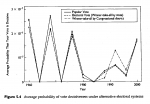
The 2000 U.S. presidential election rekindled interest in possible electoral reform. While most of the popular and academic accounts focused on balloting irregularities in Florida, such as the now infamous "butterfly" ballot and mishandled absentee ballots, some also noted that this election marked only the fourth time in history that the candidate with a plurality of the popular vote did not also win the Electoral College. This "anti-democratic" outcome has fueled desire for reform or even outright elimination of the electoral college. We show that after appropriate statistical analysis of the available historical electoral data, there is little basis to argue for reforming the Electoral College. We first show that while the Electoral College may once have been biased against the Democrats, the current distribution of voters advantages neither party. Further, the electoral vote will differ from the popular vote only when the average vote shares of the two major candidates are extremely close to 50 percent. As for individual voting power, we show that while there has been much temporal variation in relative voting power over the last several decades, the voting power of individual citizens would not likely increase under a popular vote system of electing the president.