
Citation:
 | Article | 524 KB |
Abstract:
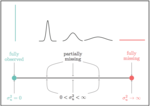
Although social scientists devote considerable effort to mitigating measurement error during data collection, they often ignore the issue during data analysis. And although many statistical methods have been proposed for reducing measurement error-induced biases, few have been widely used because of implausible assumptions, high levels of model dependence, difficult computation, or inapplicability with multiple mismeasured variables. We develop an easy-to-use alternative without these problems; it generalizes the popular multiple imputation (MI) framework by treating missing data problems as a limiting special case of extreme measurement error, and corrects for both. Like MI, the proposed framework is a simple two-step procedure, so that in the second step researchers can use whatever statistical method they would have if there had been no problem in the first place. We also offer empirical illustrations, open source software that implements all the methods described herein, and a companion paper with technical details and extensions (Blackwell, Honaker, and King, 2017b).
Notes:
This is the first of two articles to appear in the same issue of the same journal by the same authors. The second is “A Unified Approach to Measurement Error and Missing Data: Details and Extensions”.