
The Significance of Roll Calls in Voting Bodies: A Model and Statistical Estimation
Gary King. 1986.
"The Significance of Roll Calls in Voting Bodies: A Model and Statistical Estimation".
Social Science Research, 15, Pp. 135–152.
Abstract
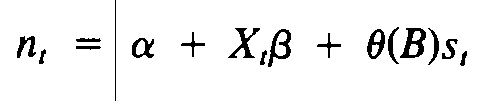
In the long history of legislative roll call analyses, there continues to exist a particularly troubling problem: There is no satisfactory method for measuring the relative importance or significance of individual roll calls. A measure of roll call significance would be interesting in and of itself, but many have realized that it could also substantially improve empirical research. The consequence of this situation is that hundreds of researchers risk heteroskedastic disturbances (resulting in inefficient estimates and biased standard errors and test statistics), are unable to appropriately choose the roll calls most suited to their theory (resulting in analyses that may not correctly test their theory), and often use methods that create more problems than they solve (resulting in selection bias, unrealistic weighting schemes, or relatively subjective measures). This article introduces a new method designed to meet these problems. Based on an application of Box-Tiao intervention analysis, the method extracts from observed voting participation scores the “revealed preferences” of legislators as a measure of roll call significance. Applying this method to roll calls from the U.S. Senate demonstrates the success of the method and suggests its utility in applied research.
See Also
- [Paper] Book Review of `Forecasting Presidential Elections' (1985)
- [Paper] Did Illegal Overseas Absentee Ballots Decide the 2000 U.S. Presidential Election? (2004)
- [Paper] Do Nonpartisan Programmatic Policies Have Partisan Electoral Effects? Evidence from Two Large Scale Experiments (2020)
- [Paper] Estimating Partisan Bias of the Electoral College Under Proposed Changes in Elector Apportionment (2012)
- [Paper] Estimating the Probability of Events That Have Never Occurred: When Is Your Vote Decisive? (1998)
- [Paper] No Evidence on Directional Vs. Proximity Voting (1999)
- [Paper] On Party Platforms, Mandates, and Government Spending (1993)
- [Paper] Ordinary Economic Voting Behavior in the Extraordinary Election of Adolf Hitler (2008)