Startups
News story: “Entrepreneurial Academia with Gary King”
 Crimson Hexagon
— Merged with Brandwatch, acquired by Cision.
🔗
Crimson Hexagon
— Merged with Brandwatch, acquired by Cision.
🔗

The Story of Crimson Hexagon — Originally posted @kinggary on Twitter, 8 March 2021
A little more on the big news: Crimson Hexagon, the company I founded with Candace Fleming in 2007 (now called @Brandwatch after a merger), is being acquired by @Cision in the biggest exit ever in social media measurement; see brandwatch.com/blog/cision. 1/10
Our founding principle: The invention of social media made it possible for one person to speak & potentially for billions to hear, but no technology had made it possible for any one person to understand what so many others were saying. Our technology does. 2/10
Over time I've learned: Industry can hire some people we can't attract to the university. I can hire some types that industry would never be able to lure away from academia. The key is working together: a flow of information back and forth between sectors makes both better. 3/10
Crimson Hexagon began with unrelated research with my postdoc Ying Lu (now at NYU) that enabled WHO to estimate causes of death in developing countries that have no infrastructure for death certifications. 4/10
I was studying political views in social media (the "blogosphere"!) with my grad student Dan Hopkins, but all NLP methods failed miserably. We finally discovered that adapting the same cause-of-death methods solved the academic problem, and also led to founding this startup. 5/10
There've been SO many academic articles (and knowledge for public good) that wouldn't exist without this industry connection. The academic benefits of leveraging the commercial world are massively underestimated in the academy. The reverse is surely true as well. 6/10
This also made possible research reverse engineering Chinese censorship & fabrication of social media posts, the remarkable effects of small media outlets on the US national conversation, & many others. 7/10
One more: I'd been trying to improve our Crimson Hexagon algorithm for years when my grad students, Connor Jersak & Anton Strezhnev, & I finally solved the problem (via an intergenerational breakthrough: Anton was previously Dan Hopkins' undergrad!). 8/10
Congratulations to @Cision; big things to come for sure! See Cision Press Release. 9/10
Thanks to my coauthors; cofounder; CEOs Candace Fleming, @scootr, @triciagottesman, @StephanieSNewby, & @joodoo9; >500 Brandwatch employees; thousands elsewhere whose jobs depend on Brandwatch software; investors; & Harvard's OTD, IQSS, Gov Dept, FAS, OPP, OGC, IRB, etc. 10/10
 Thresher
— Acquired by Two Six Technologies, a Carlyle Company.
🔗
Thresher
— Acquired by Two Six Technologies, a Carlyle Company.
🔗

The Story of Thresher — Originally posted @kinggary on Twitter, 2 May 2022
1. I'm excited to announce that Thresher, a startup I co-founded in 2015 with Becky Fair (@rebfair), has been acquired by Two Six Technologies (@twosixtech, a Carlyle Company, @OneCarlyle). See today's press release.
2. Thresher was bootstrapped, profitable from day one, and grew fast; we refused all offers from outside investors.
3. Thresher was born from 2 research programs of mine at Harvard's IQSS with grad students @PkphLam, @JenjPan & @MollyeRoberts. The 1st is on censorship & fabrication of Chinese social media posts (see 2 APSR articles & 1 in Science).
4. This censorship research began when we serendipitously discovered, while analyzing data from my earlier startup Crimson Hexagon (acquired last year), how to download all Chinese social media posts before the government could censor them.
5. The 2nd research program leading to Thresher improves the first (crucial but usually ignored) selection step in automated text analysis (see AJPS). Last year, Thresher spun off this work as a separate startup, QuickCode.
6. Thresher's products include signal-rich data, novel quantitative methods, and world-class qualitative experts to help corporate & government decision makers understand China, even when the signal has been censored, fabricated, or otherwise manipulated.
7. Working closely with industry is one of the best ways of accomplishing the goals of academia, i.e., the creation, preservation, and distribution of knowledge; this is too often ignored by social scientists.
8. Academics often leverage universities, foundations, students, & coauthors for their work, ignoring the more impactful commercial world. Leveraging industry can unlock vast datasets, knowledge, and capacity; improve academic work; and create substantial public good.
9. Industry can hire some folks I could never hire in a university, but I can hire others who industry could never hire. Establishing a flow of information back and forth makes us all better. The social sciences have all the tools to build these connections.
10. Big congratulations and many thanks to the fabulous Thresher team, including my superstar co-founder Becky Fair, all now at Two Six Technologies & about to take it to the next level.
11. Thanks also to Harvard's IQSS, OTD, Gov Dept, FAS, OGC, IRB, etc.
12. And my wicked smart (in Boston-speak) former grad students? Patrick Lam was Thresher's first Lead Data Scientist for 4 years & is now Research Scientist at Meta; Jen Pan is Professor at Stanford; Molly Roberts is Chancellor's Associates Endowed Chair at UCSD.
13. Finally, congratulations to Two Six Technologies (@twosixtech) and the Carlyle Group (@OneCarlyle). Combined with Thresher's tech and people, big things to come for sure.
 Learning Catalytics
— Acquired by Pearson.
🔗
Learning Catalytics
— Acquired by Pearson.
🔗
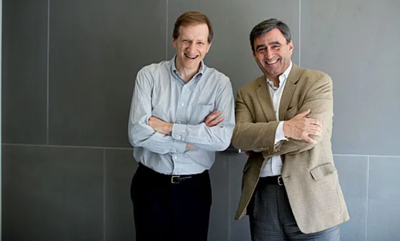
From the Harvard Gazette — "Fueling the entrepreneurial spirit" by Alvin Powell, Harvard Staff Writer, August 2013
"We're not businesspeople, but we are entrepreneurs."
In a simple sentence, Harvard Professor Gary King both described the gulf that separates university faculty members from the business world and provided the reason why some accept the challenge of crossing it: an entrepreneurial spirit that already guides their research and teaching.
King, the Albert J. Weatherhead III University Professor, is a bit of an anomaly: a social scientist who's also proven to be an entrepreneur. King leveraged research analyzing social media trends into a 2007 startup company, Crimson Hexagon, which was recently named by Fast Company as one of the 10 most innovative companies on the Web. He also collaborated with Eric Mazur, Balkanski Professor of Physics and Applied Physics, to ally his data analytic skills with Mazur's teaching technology and methodology to form another startup, Learning Catalytics, in 2011, focused on improving classroom education.
King and Mazur are among a growing number of faculty members, fellows, and even students who are conducting some of their academic work with an eye outside the lab and the classroom, thinking about ways to have a broader impact by commercializing ideas and discoveries and bringing them to the marketplace.
Harvard's Office of Technology Development (OTD), established in 2006, is the central pillar of efforts to advance discoveries made across campus. The office's core mission is to foster the spirit of innovation and entrepreneurship among faculty, harness the power of their intellectual property, and advance the development of their discoveries for the good of society, according to Isaac Kohlberg, Harvard's senior associate provost and chief technology development officer.
OTD can help campus innovators start spinout companies, license their technology to existing firms, and further the development of their research through industry-sponsored funding. Starting a venture can lead to an unusual set of challenges and concerns for many budding entrepreneurs. By combining business expertise and scientific knowledge, OTD demystifies the process of creating a startup and helps to connect the dots among laboratories, investors, and industry leaders, Kohlberg said.
"The Harvard research enterprise is fueled by talented faculty and students who are eager to expand outside of the traditional academic outlets and connect on a broader level," Kohlberg said. "OTD provides the support and expertise needed to help those with entrepreneurial ambition maximize their discoveries so they can have a large societal impact."
Figures show that those efforts are working. Reports of invention are up, showing that investigators are increasingly mindful of the potential commercial applications of their discoveries. Those numbers have almost doubled since 2007, to 412 in 2013. The number of patents issued also rose significantly, to 74 from 43, as did the number of patent applications filed, to 231 from 147.
The value of Harvard innovation is also being recognized outside the University's walls. Industry research more than tripled from 2007 to 2013, when 81 agreements brought in $42.3 million. Licensing agreements, which bring royalties to the University on income earned by its intellectual property, rose 41 percent over the same period. In 2013, OTD also launched nine companies that were formed around technology developed on campus.
Developments in recent months put faces on those statistical trends. Mazur and King's Learning Catalytics proved promising enough to be acquired by education giant Pearson, while a startup based on the work of chemistry Professor Andrew Myers, Tetraphase Pharmaceuticals, went public in March with an initial stock offering.
"The OTD office, from the top down, is staffed with an extraordinary group of professionals," Myers said. "They've been very much a partner and extremely helpful."


