When AI Makes Each of Us Better & All of Us Worse (and what to do about it) (talk at the Harvard AI Research Seminar, 10/6/2026)
Abstract
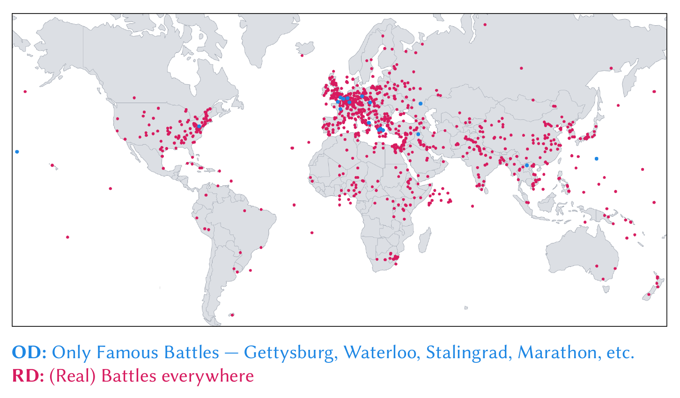
Tech companies train large language models (LLMs) to give the correct answer to factual questions, which, for questions with no correct answer, means giving the most common one. As a result, each scientist, artist, and writer who uses an LLM becomes more productive, while science, art, and literature as a whole become more homogeneous and conventional. An LLM suggests more creative ideas for a paper, startup, or living-room wall than you would think of alone, but it also gives nearly the same ideas to your colleagues, competitors, and neighbors. We illustrate with an experiment showing that LLM reviews of journal submissions now dominate the best human peer reviews (by any relevant measure). This will help authors, reviewers, editors, and journals but, with effectively one judge (since different LLMs compete on the same benchmarks), it risks homogenizing the field. We then introduce the first algorithm to induce creativity by enabling users to understand and choose from the whole search space of possible answers. We illustrate with applications ranging from the choice of research topics in world history to wedding dress shopping.
Based on joint work with (subsets of) Queenie Luo, Mike Puett, Mike Smith, and Steve Worthington.
See Also
- [Paper] AI Article Reviews Dominate Human Peer Reviews at Their Best: Evidence and Policy Choices (2026)
- [Paper] Inducing Sustained Creativity and Diversity in Large Language Models (2026)
- [Presentation] Empowering Social Science Research With Industry Partnerships (Dean's Symposium on Social Science Innovations, Harvard) (2021)
- [Paper] Good Research and Bad Research: Extending Zimile's Criticism (1993)
- [Presentation] Who's to Blame for Survey Instability: Respondents with Nonexistent Preferences or Researchers with Flawed Measures? (talk at MIT, 9/17/2026) (2026)
- [Presentation] Who's to Blame for Survey Instability: Respondents with Nonexistent Preferences or Researchers with Flawed Measures? (talk at American Political Science Association, 9/5/2026) (2026)
- [Presentation] Who's to Blame for Survey Instability: Respondents with Nonexistent Preferences or Researchers with Flawed Measures? (talk at Society for Political Methodology at Michigan State University, 7/18/2026) (2026)
- [Presentation] Who's to Blame for Survey Instability: Respondents with Nonexistent Preferences or Researchers with Flawed Measures? (talk at University of Chicago, 4/14/2026) (2026)